
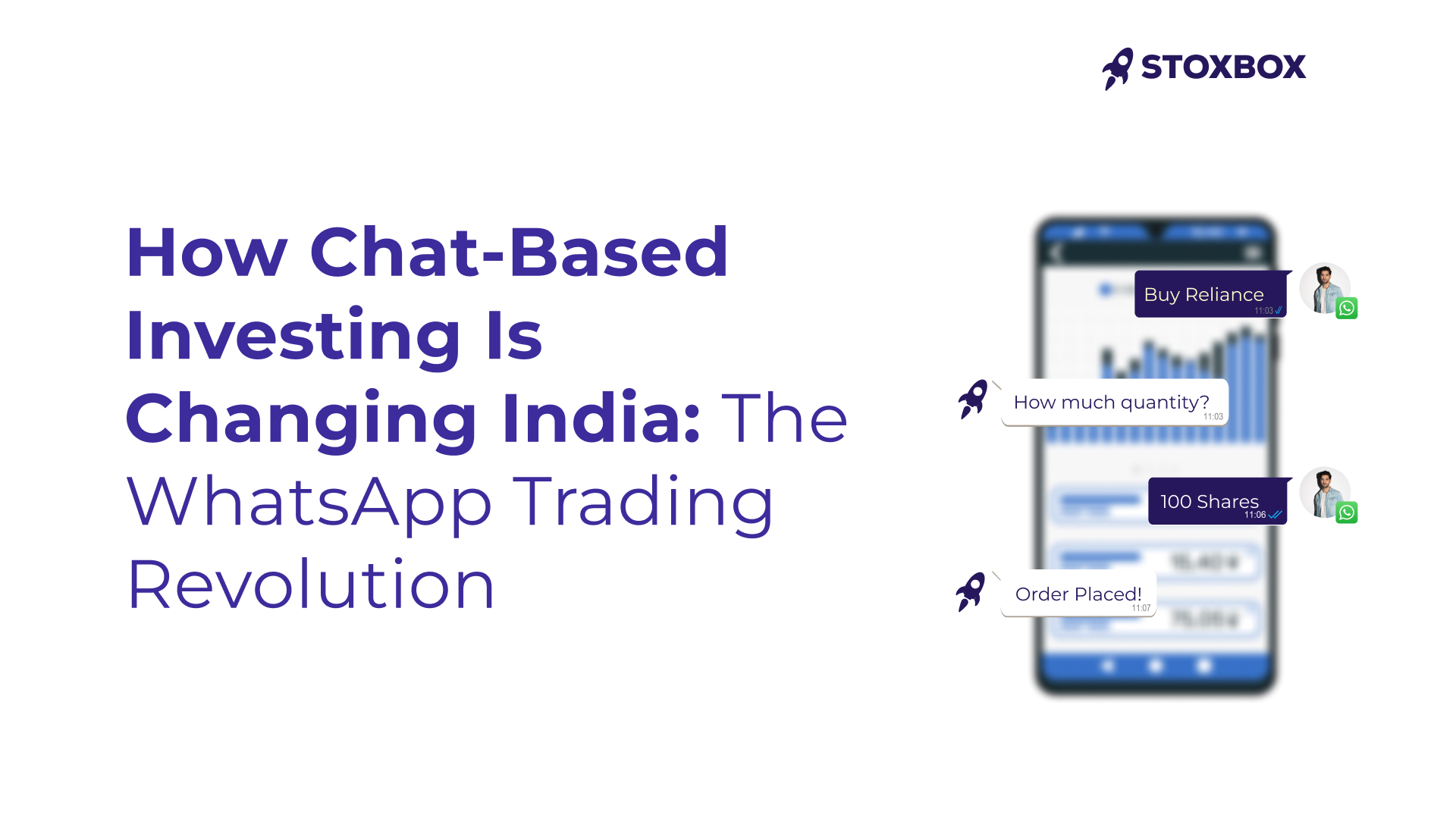
Remember when investing meant visiting a broker’s office with physical share certificates? India’s investment landscape has undergone a dramatic transformation, and the latest evolution is happening right in your messaging apps. Chat-based investing through platforms like WhatsApp is fundamentally changing how millions of Indians interact with financial markets. But is this convenience-driven approach genuinely democratising investing, or does it come with hidden risks?
Table of Contents
The Rise of Chat-Based Investing in India
India’s investment democratisation has progressed through distinct phases: from physical share certificates to online trading platforms, then to mobile apps, and now to conversational interfaces embedded in messaging platforms.
The Numbers Tell the Story: India has over 560 million WhatsApp users as of 2025, making it the app’s largest market globally. Simultaneously, the country added approximately 30 million new demat accounts between 2020 and 2025, with retail investor participation surging post-pandemic.
Convergence Point: Chat-based investing emerges at the intersection of these trends. Rather than downloading separate investment apps or navigating complex web platforms, investors can now execute trades, check portfolio values, and receive market updates directly through messaging apps they already use dozens of times daily.
Market Penetration: While exact user numbers vary by platform, industry estimates suggest several million Indian investors now use some form of chat-based investment interface, whether through dedicated chatbots, WhatsApp Business integrations, or conversational AI assistants.
This shift represents more than technological convenience. It reflects changing expectations about how financial services should integrate into daily life, particularly among younger, digitally native investors.
How Chat-Based Investment Platforms Actually Work
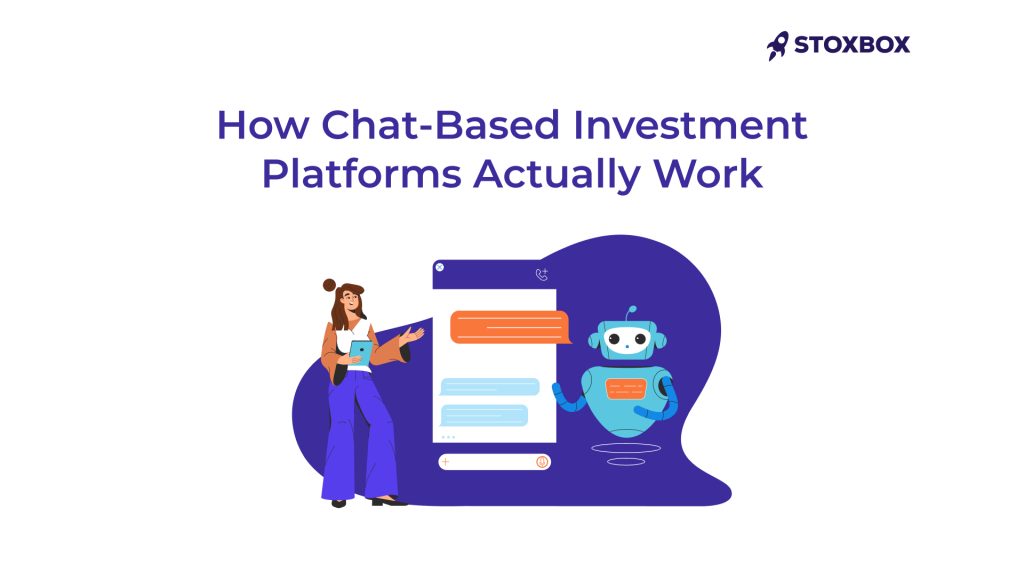
Chat-based investing isn’t just traditional trading dressed up in a messaging interface. It represents a fundamentally different user experience:
Conversational Commands: Instead of navigating through multiple screens, investors type or speak commands like “Buy 10 shares of Reliance” or “What’s my portfolio value?” The system interprets intent and executes actions.
Natural Language Processing: Advanced AI systems understand context, handle ambiguous queries, and learn individual user preferences over time. They can interpret “Should I buy IT stocks now?” and provide personalised responses based on the user’s portfolio and market conditions.
Multi-Modal Interaction: Modern chat-based platforms combine text, voice commands, quick-reply buttons, and rich media. An investor might ask about market trends and receive a combination of text analysis, interactive charts, and actionable buttons.
Integration Layers: Behind the conversational interface, these platforms integrate with stock exchanges, payment systems, KYC databases, and market data providers. A simple chat message triggers complex workflows across multiple systems.
Authentication and Security: Platforms employ multi-factor authentication, biometric verification, and transaction PINs to ensure security despite the casual interface. The challenge is balancing convenience with robust security.
StoxBot exemplifies this approach providing AI-powered investment insights and trade execution capabilities directly through WhatsApp, making sophisticated market analysis accessible through familiar messaging interfaces.
Why Indian Investors Are Embracing Conversational Investing
Several factors drive the rapid adoption of chat-based investing in India:
Smartphone-First Market: India has over 750 million smartphone users, with many experiencing the internet primarily through mobile devices rather than desktops. Chat interfaces feel more natural on mobile than complex trading platforms designed for larger screens.
Messaging App Ubiquity: WhatsApp, Telegram, and similar platforms are how Indians communicate daily. Bringing investing into these familiar environments dramatically lowers psychological barriers to engagement.
Language Accessibility: Advanced natural language processing enables conversational investing in multiple Indian languages. An investor in Tamil Nadu can execute trades in Tamil, while someone in Gujarat uses Gujarati, without navigating English-dominated traditional platforms.
Reduced Complexity: Traditional trading platforms overwhelm new investors with technical terminology, multiple screens, and complex order types. Chat interfaces can progressively introduce complexity, starting with simple commands and gradually expanding capabilities.
Instant Gratification: Younger investors expect immediate responses and quick execution. Chat-based platforms deliver market updates, trade confirmations, and portfolio snapshots within seconds, matching social media’s instant feedback loops.
Social Validation: Some platforms incorporate community features where investors can see popular trades, trending stocks, or expert recommendations within the same chat interface, blending investing with social discovery.
Major Players in India's Chat-Based Investment Space
Several categories of players are shaping India’s chat-based investing ecosystem:
Traditional Brokers Adapting: Established brokerages like Zerodha, Upstox, and Angel One have introduced chatbot features and WhatsApp integrations to complement their primary platforms. These serve primarily for notifications, basic queries, and simple transactions.
Fintech Innovators: New-age platforms built conversational interfaces as their primary user experience rather than add-ons. These companies leverage AI extensively to provide personalised recommendations and automated portfolio management through chat.
Robo-Advisory Integration: Platforms combining robo-advisory with chat interfaces allow investors to discuss investment strategies conversationally, receive AI-generated advice, and implement recommendations without leaving the chat environment.
Research and Analytics: Some platforms focus on delivering market research, stock recommendations, and portfolio analysis through conversational interfaces, monetising through subscription models rather than transaction fees.
Bank-Led Initiatives: Several major banks have introduced investment capabilities within their banking chatbots, allowing existing customers to invest through familiar banking channels.
The landscape remains fragmented, with different platforms excelling at different aspects of the chat-based investing experience.
The Technology Enabling This Transformation
Chat-based investing relies on several converging technologies:
Large Language Models: Advanced AI models can understand investment queries phrased in natural language, extract intent, and generate appropriate responses or actions. These models continue improving rapidly, handling increasingly complex queries.
Real-Time Market Data Integration: Chat platforms must access live market data, execute trades in milliseconds, and provide instant confirmations. This requires robust API integrations with stock exchanges and market data providers.
Secure Payment Infrastructure: UPI’s success in India provides the payment backbone enabling instant fund transfers within chat interfaces. This infrastructure makes deposits, withdrawals, and trade settlements seamless.
Cloud Computing: The ability to scale conversational platforms to millions of concurrent users requires cloud infrastructure that can handle sudden spikes during market volatility or major events.
Regulatory Technology: Compliance requirements around KYC verification, transaction logging, and audit trails must be maintained even within conversational interfaces. RegTech solutions enable this compliance automatically.
Biometric Authentication: Fingerprint and facial recognition technologies embedded in smartphones provide secure yet frictionless authentication for high-value transactions initiated through chat.
Benefits Chat-Based Investing Brings to Indian Markets
This evolution delivers several tangible benefits to India’s investment ecosystem:
Democratising Market Access: Chat-based platforms particularly benefit first-time investors who find traditional platforms intimidating. The conversational approach feels less formal and more approachable, encouraging participation from demographics previously excluded from equity markets.
Financial Literacy Through Interaction: Rather than requiring investors to understand markets before participating, chat platforms can educate progressively. An investor asking “What is P/E ratio?” receives an explanation immediately contextualised to stocks they’re considering.
Reducing Information Asymmetry: Sophisticated market analysis previously accessible only to wealthy investors or institutional players can now be delivered through chat interfaces to retail investors, levelling the playing field somewhat.
Time Efficiency: Busy professionals can manage investments during commutes, between meetings, or during breaks through quick chat interactions, rather than requiring dedicated time at a computer.
Portfolio Monitoring: Automated alerts about portfolio performance, market movements, or news affecting holdings keep investors informed without requiring them to actively check dashboards repeatedly.
Lower Entry Barriers: Minimum investment amounts and account balance requirements often decrease when platforms reduce operational overhead through automation, making investing accessible to lower-income participants.
StoxCalls provides expert market analysis that can be accessed through conversational interfaces, bringing institutional-quality research to retail investors through familiar chat platforms.
Risks and Concerns Investors Should Know
Despite benefits, chat-based investing introduces specific risks:
Overtrading Temptation: The extreme convenience of chat-based trading can encourage impulsive decisions. When executing a trade requires just a message, the friction that previously encouraged thoughtful decision-making disappears.
Security Vulnerabilities: Messaging apps, while generally secure, present different attack vectors than traditional trading platforms. Phishing attacks, SIM swapping, and account takeovers pose genuine threats.
Oversimplification Risk: Making investing feel as easy as ordering food might obscure genuine risks. New investors may underestimate market volatility or overlook important fundamentals when interfaces hide complexity.
AI Limitation Misunderstanding: Conversational AI can confidently provide incorrect information or inappropriate advice. Investors treating chatbot recommendations as professional financial advice face potential losses.
Privacy Concerns: Chat-based platforms collect extensive data about user behaviour, financial situations, and preferences. How this data is stored, used, and potentially shared raises privacy questions.
Limited Dispute Resolution: When trades are executed through casual chat commands, proving unauthorised transactions or disputing executions becomes more complex than with traditional platforms’ detailed order confirmation processes.
Platform Dependency: Investors heavily dependent on specific chat platforms face risks if those services experience outages, security breaches, or discontinuation.
The Future of Chat-Based Investing in India
Several trends will likely shape how chat-based investing evolves:
Voice-First Interfaces: As voice recognition improves and becomes available in more Indian languages, voice-based investing through smart speakers and phone assistants will likely grow, particularly in tier-2 and tier-3 cities.
Hyper-Personalisation: AI systems will increasingly tailor investment suggestions, risk assessments, and portfolio strategies to individual users based on their unique financial situations, goals, and behavioural patterns.
Embedded Finance: Investment capabilities may embed directly into non-financial platforms. Imagine shopping apps suggesting investing spare change, or ride-hailing apps offering investment options during rides.
Community-Driven Insights: Platforms may increasingly blend individual chat interactions with community wisdom, showing users what similar investors are doing while maintaining privacy.
Regulatory Standardisation: As chat-based investing matures, expect more specific regulatory frameworks addressing unique challenges and establishing standards for conversational financial services.
Cross-Platform Integration: Future platforms may work across multiple messaging apps, allowing investors to interact through WhatsApp, Telegram, or proprietary apps interchangeably while accessing the same portfolio.
AI Financial Planning: Beyond trade execution, conversational AI will increasingly provide comprehensive financial planning, tax optimisation, and goal-based investing advice through natural dialogue.
Use StoxBox’s comprehensive platform to experience how traditional and conversational investing interfaces can complement each other, providing flexibility based on your preferences and situations.
Take Your Investment Experience to the Next Level
Experience the future of investing with StoxBox:
- StoxBot – Get AI-powered investment insights directly through WhatsApp
- StoxCalls – Access expert market analysis and recommendations through conversational interfaces
- Trading Platform – Execute trades seamlessly across traditional and chat-based interfaces
- Investment Tools – Use calculators and analysis tools optimised for mobile and conversational access
Download our app today →
Frequently Asked Questions
Is chat-based investing legal and regulated in India?
Yes, chat-based investing is legal in India when provided by SEBI-registered brokers or platforms. These services must comply with all existing regulations around online trading, KYC norms, and client protection. The conversational interface is simply a different user experience layer over regulated investment infrastructure. However, investors should verify that any platform they use is properly registered and authorised.
How secure is investing through WhatsApp or other messaging apps?
Security depends on both the messaging platform and the investment service provider. Reputable platforms use end-to-end encryption for communications, multi-factor authentication, and biometric verification for transactions. However, investors must also protect their devices, avoid sharing OTPs or passwords, and be vigilant about phishing attempts. Chat-based investing can be as secure as traditional platforms when proper precautions are followed.
Can I execute all types of trades through chat-based platforms?
Currently, most chat-based platforms focus on simpler transactions like equity delivery trades, mutual fund investments, and basic portfolio monitoring. Complex trades involving options, futures, or advanced order types may still require traditional platforms. However, capabilities are expanding rapidly as natural language processing improves and platforms mature.
Do chat-based investment platforms charge different fees?
Fee structures vary by platform rather than interface type. Some chat-based platforms charge the same brokerage as traditional platforms, while others offer zero-commission trading supported by other revenue streams. Investors should compare total costs including brokerage, account maintenance, and any subscription fees regardless of the interface they prefer.
What happens if the AI gives wrong investment advice?
AI-generated advice through chat platforms should be treated as information rather than professional financial advice. Most platforms include disclaimers that users are responsible for their own investment decisions. If you suffer losses following AI suggestions, recovering damages is extremely difficult. Always verify important information, understand risks, and consider consulting qualified advisors for significant decisions.
Can chat-based platforms help with tax planning and reporting?
Many chat-based platforms provide basic tax reports showing capital gains and dividend income. Some offer conversational interfaces for tax-related queries. However, comprehensive tax planning typically still requires human expertise. Platforms may suggest tax-saving investment options but usually don’t provide detailed tax strategy advice through chat interfaces.
we dont want major players given we have chat based investing . and nothing negative about it given its our flagship service.
Your Wealth-Building Journey Starts Here